Docs Trade
Size, leverage and margin
Size by the position, by the margin it takes or by the dollars you would lose; leverage, isolated or cross, and reduce only.
Three switches above the size field decide what the number you type means.
- Position: what the position is worth. $1,000 at 5x is a $1,000 position on $200 of margin.
- Margin: what it takes from your balance. $200 at 5x is the same $1,000 position.
- Risk: what you would lose if your stop fills. Type the dollars, set a stop, and the ticket works out the size. It is there for Market and Limit orders and switches TP/SL on, since it needs a stop.
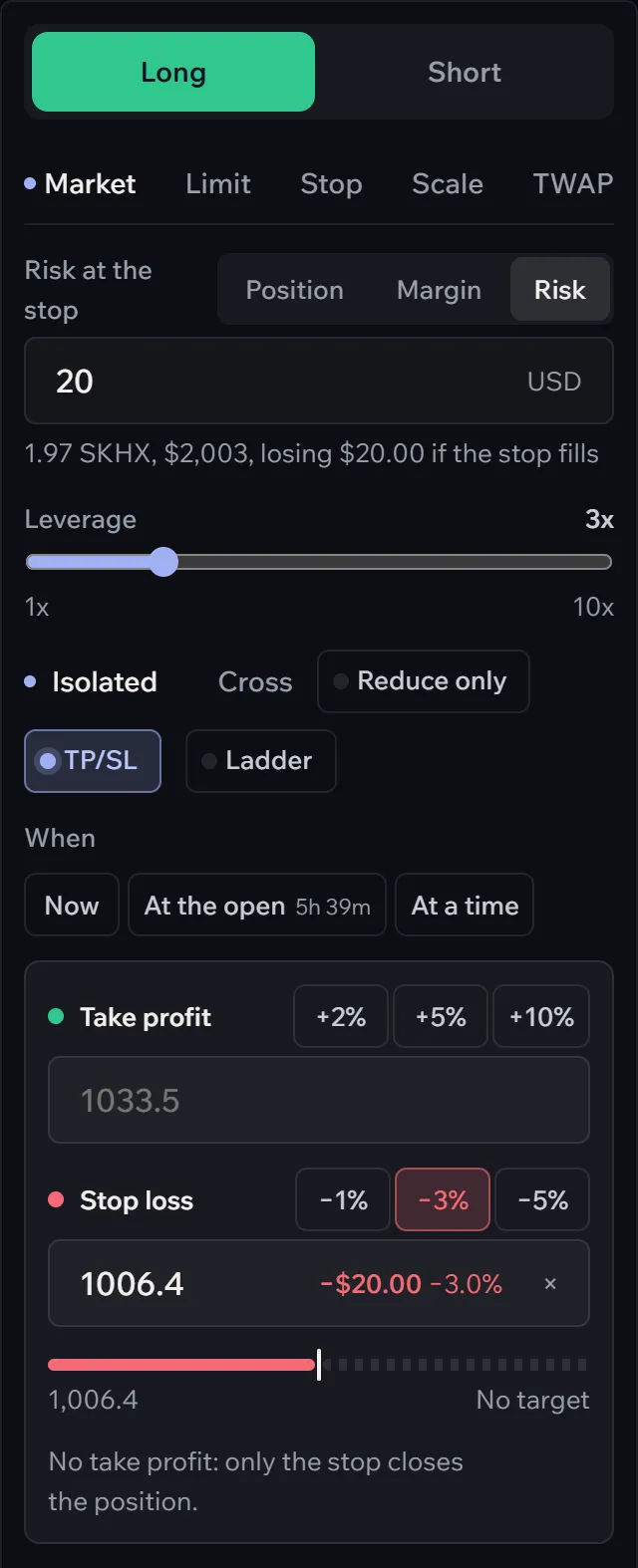
The bar under the size uses a share of what you can trade, from your balance on that market’s exchange and the leverage.
Leverage
Drag from 1x to the market’s maximum. The ticket shows the liquidation price before you send: at 10x a move of a little under 10% against you liquidates the position; at 3x about a third. During the guarded minutes around an open, the bar shows the guard’s cap (3x) on the scale (The session guard).
Isolated or cross
Isolated keeps each position’s margin apart: a liquidation takes that margin and nothing else. Cross shares the account’s whole balance on that exchange between positions, so they last longer and can take each other down. Most stock perps are isolated only; the ticket uses isolated there whatever you pick.
Reduce only
The order may only make a position smaller. Use it for exits you place by hand, so a stray fill can never flip you from long to short.